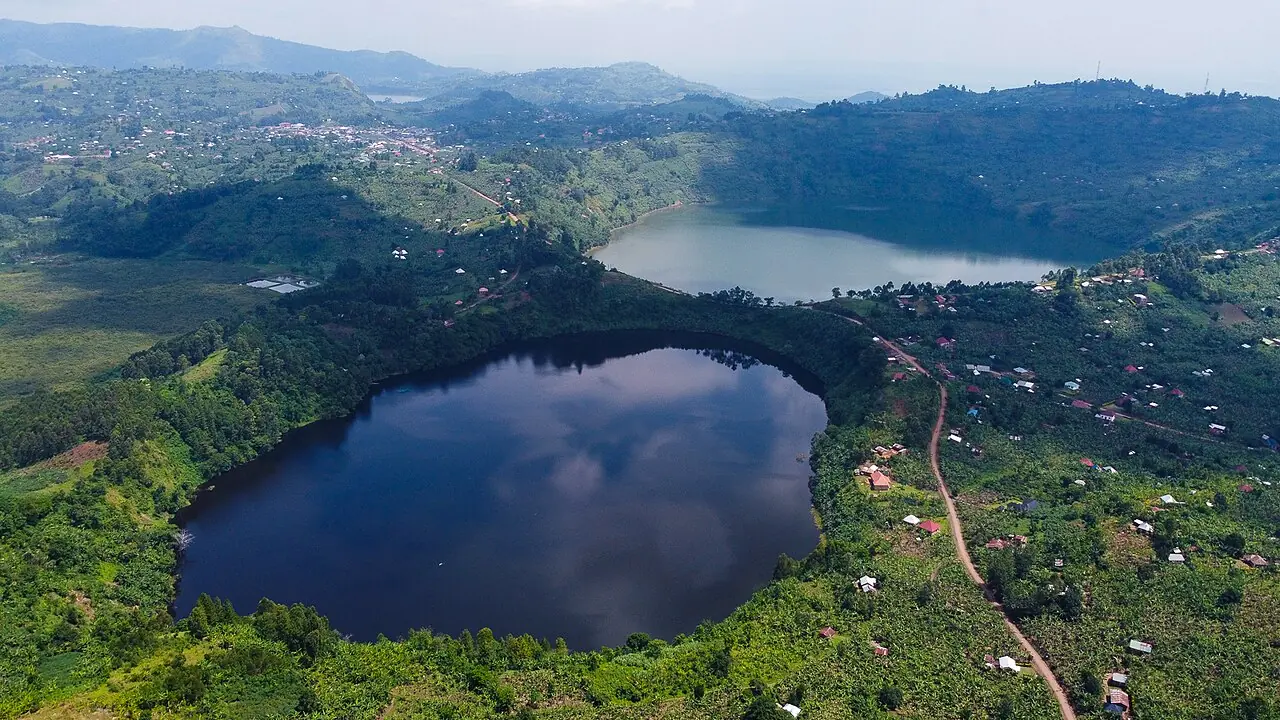

Two different ways to include the lakes
The Fort Portal region can suit a quiet base with guided walks and time between forest activities. Uganda Tourism Board describes crater-lake scenery around Nyakasura and the western region. Confirm what is actually accessible from your accommodation rather than treating every lake on a regional map as a public attraction.
Around Queen Elizabeth, crater scenery is part of a broader protected-area landscape. Ask whether the proposed drive stays inside the national park, which route is currently accessible and whether entry and guiding are already included.
Sources: Uganda Tourism Board: destination catalogue 2025 · UWA: Queen Elizabeth National Park
Choose by access and purpose
| Your priority | What to ask for | Common planning mistake |
|---|---|---|
| A quiet lake stay | Exact property location, view and nearby walking options | Booking on a regional label alone |
| A guided walk | Permission, surface, distance, slope and a local guide | Assuming a visible path is public |
| A Kibale combination | Drive time to your actual chimp briefing point | Using a scenic lodge that makes a fixed briefing impractical |
| A Queen Elizabeth drive | Park boundaries, route status and fee inclusions | Treating a crater excursion as independent of park entry |
| A boat outing | Authorised operator, weather policy and lifejackets | Assuming every lake offers boats or safe swimming |
Treat walking routes as local arrangements
Ask the host or guide who manages the land, whether permission is required and what the route crosses. Paths may pass farms, private land and steep or slippery ground. An attractive viewpoint does not make every approach suitable for independent wandering.
Request the walking duration and difficulty for your party rather than a generic rating. Wear appropriate footwear, carry water and agree a turnaround if weather worsens. Ask before photographing people or entering working areas.
Do not turn a lake view into a swimming recommendation
We do not describe crater lakes as automatically safe for swimming. CDC’s Uganda advice identifies freshwater exposure risks, while local physical conditions add separate hazards. Water clarity, the absence of a visible animal or a hotel’s enthusiasm does not resolve those questions.
Discuss freshwater activities with a travel-health professional and follow current local advice. If taking a boat, confirm a suitable lifejacket for every passenger and avoid departing in unsuitable weather.
Sources: CDC: Uganda travel health
Keep the day compatible with your permit
If Kibale chimp tracking is the fixed event, choose the crater-lake base only after checking the briefing location and reporting time. A relaxed breakfast beside a lake is appealing on a free day and impractical when a long transfer to a timed permit starts before dawn.
Use a separate day for the lake walk or leave the afternoon flexible after the forest activity. A trek’s duration can vary, so avoid booking a second non-refundable activity with a tight start time.
Sources: UWA: Kibale National Park
What a reliable price quote should include
No current complete region-wide crater-lake tariff was verified in our research. Ask for transport, guiding, any land-access payment and optional boat charges separately. A lodge stay may include a view without including a guided walk.
For a national park excursion, use the park’s current written fee confirmation. Our Uganda park-fee guide distinguishes the older published schedule from later amendments so that a historical number does not quietly become a current promise.
Sources: UWA: conservation tariff July 2024-June 2026 · UWA: tariff changes 2026-2027, dated 26 February 2026
How much time to allow
Our editorial preference is a settled stay with at least one unstructured period if the lakes are a main reason for visiting. If they are only a scenic pause, choose one accessible viewpoint on the existing route rather than adding a large detour.
Lake Bunyonyi is a different southwest itinerary choice and should not be described as interchangeable with the Fort Portal crater-lake area. Choose between them according to the gorilla sector, next destination and amount of road travel you want.
Questions & answers
Are all crater lakes public sites?
Do not assume so. Confirm land access, permissions and any local charges with the actual host or guide.
Can I swim in a clear-looking crater lake?
Clear water is not proof of medical or physical safety. Seek current professional guidance rather than relying on appearances.
Can a crater-lake lodge be a Kibale base?
Possibly, but verify the exact drive to your permit’s briefing point before booking.
Is Lake Bunyonyi the same base as the Fort Portal crater lakes?
No. It is a different southwest route choice; compare the actual transfers before deciding where to stay.
Sources & verification
Checked on 21 September 2026. Prices apply only to the visitor category and dates stated. Route timings, suggested stays and budget scenarios are editorial planning estimates unless a source is specified.
- Uganda Tourism Board: destination catalogue 2025 - checked 20 September 2026.
- UWA: Queen Elizabeth National Park - checked 20 September 2026.
- UWA: Kibale National Park - checked 20 September 2026.
- CDC: Uganda travel health - checked 20 September 2026.
- UWA: conservation tariff July 2024-June 2026 - checked 20 September 2026. The document is labelled July 2024-June 2026. Unamended rates after that period require booking confirmation; the February 2026 notice is listed separately.
- UWA: tariff changes 2026-2027, dated 26 February 2026 - checked 20 September 2026. Low-season permits take immediate effect; the revised regular tariff starts 1 January 2027. These are different effective dates.
Published · Updated . Send a correction.