
When to go
Rain and cloud can be part of a highland lake stay, and wet weather can affect paths and the last road. Choose accommodation with a comfortable place to spend a slow afternoon rather than judging the stay entirely by a sunny photograph.
Boat outings depend on conditions and the operator’s judgement. Keep them flexible, especially after a strenuous trek when your energy may be uncertain. The best use of the stop may be rest, views and a short guided outing rather than a packed activity list.
Sources: Uganda Tourism Board: adventure activities · CDC: Uganda travel health
How to get there
Confirm the route through Kabale or from the actual Bwindi sector. A lodge described as “near Bwindi” may be convenient for one sector and awkward for another. Request the full door-to-door transfer, including breaks and any boat connection.
If staying on an island, establish the departure jetty, last practical collection time and how flight or road delays are handled. Ask about lifejackets, luggage protection and the final climb or walk to the room. These details can make an island stay either easy or unexpectedly demanding.
Where to make your base
A mainland base can simplify road arrival and departure; an island base can create a more separated retreat with additional boat logistics. Choose according to mobility, weather tolerance and whether you expect to leave the property frequently.
Ask about steps, slopes, room heating or bedding, meals and charging. A lake view does not establish direct water access, and a jetty does not imply safe swimming. If your priority is recovery after a gorilla trek, a comfortable room and manageable paths can matter more than an adventurous arrival.
Time by the water and what to expect
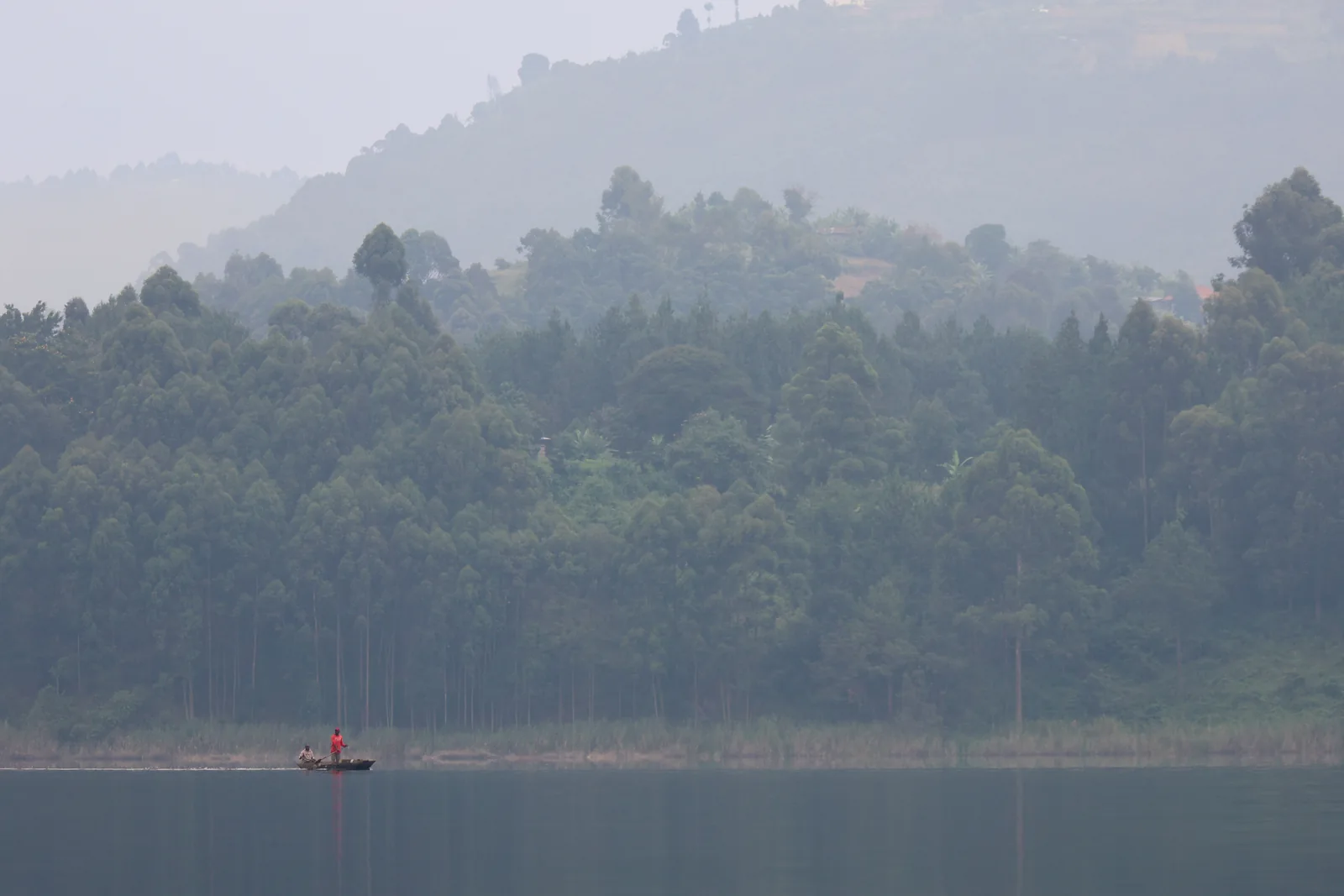
The lake is part of a lived-in landscape with communities, transport and livelihoods. A guided visit should respect private land and people’s preferences about photography. Do not treat every island or shoreline as an unrestricted attraction.
Tourism descriptions sometimes call the lake safe for swimming. We have not verified evidence that removes freshwater infection risk, and CDC’s Uganda advice is the relevant starting point for health decisions. A calm surface also does not establish boating safety; equipment and operator judgement still matter.
A useful day on the ground
Plan one optional outing, such as a short guided boat journey with a clearly stated route and suitable lifejackets. Agree whether stops involve walking, entry payments or community visits before departing. Keep the rest of the day free to rest if that is the purpose of the stay.
If walking around the area, ask about gradients, path condition and local access. Choose a route compatible with recent trekking fatigue and the return before darkness. A guide can add local context, but the visit should have a clear host and agreed compensation where it enters a community activity.
What the price should include
Ask for a written breakdown that separates accommodation, transport, entry and optional activities. A room price alone does not establish whether meals, guiding, vehicle use or transfers are included. Check which costs are per person, per vehicle or per booking before comparing two totals.
The public sources linked below do not establish a universal current price for every local activity. Where an amount is not confirmed, obtain a dated quotation from the authority or the service provider. Keep its cancellation terms with the booking, including the procedure if weather changes the activity.
How it fits into a route
Southern Bwindi sectors or Mgahinga can fit well with a Bunyonyi stop, depending on the booked permit and approach. A northern Bwindi plan needs its own transfer calculation rather than assuming the lake is adjacent to every briefing point.
On an overland return to Entebbe, Lake Mburo can break the broader journey if you have time for an actual park visit. Otherwise give the long road day its own space. Do not schedule a morning island excursion ahead of a flight connection with no recovery margin.
Map reference
Approximate geographical reference: latitude -1.28, longitude 29.92. This locates the destination broadly; use the confirmed gate, airstrip, trailhead or accommodation pin for the actual journey.
-1.28, 29.92Questions & answers
Is Lake Bunyonyi guaranteed safe for swimming?
No such guarantee is supported here. Check current medical advice on freshwater exposure; a tourism claim or clear water is insufficient.
Should I stay on an island?
Choose an island only if the boat timing, weather arrangements and walking access fit your needs. Mainland stays can simplify road logistics.
Is it close to every Bwindi sector?
No. Match the transfer to the actual sector, not the general park name.
How much is a boat trip?
A current universal official rate was not confirmed. Ask for a dated quote with route, duration, equipment and any landing fees.
How long should I stay?
Two nights is our planning suggestion if the purpose is genuine rest after tracking rather than another hurried stop.
Sources & verification
Checked on 21 September 2026. Prices apply only to the visitor category and dates stated. Route timings, suggested stays and budget scenarios are editorial planning estimates unless a source is specified.
- Uganda Tourism Board: adventure activities - checked 20 September 2026.
- CDC: Uganda travel health - checked 20 September 2026.
- UWA: Bwindi Impenetrable National Park - checked 20 September 2026.
- Uganda Tourism Board: destination guide - checked 20 September 2026.
- Wikidata - Lake Bunyonyi geographic record (CC0) - checked 21 September 2026. An approximate geographical reference, not a park gate, trailhead, hotel or navigation instruction. The original record may have coarse precision.
Published · Updated . Send a correction.